How to Tell If Your Automatic Watch Needs Servicing
Published: March 2026

An automatic watch is a mechanical instrument with dozens of tiny parts working in precise coordination. Unlike quartz watches that run on batteries, automatic watches are powered by the motion of your wrist. A weighted rotor inside the movement spins as you move, winding a mainspring that stores energy and drives the gear train.
This is beautiful engineering. But it also means there are many things that can go wrong over time. Lubricants dry out, dust infiltrates the movement, and parts wear down through friction. The question most automatic watch owners face is: how do I know when my watch needs servicing, and how urgent is it?
This guide helps you read the warning signs, understand what each one means, know when to act immediately versus when to wait, and make informed decisions about servicing costs
Warning Signs Your Automatic Watch Needs Servicing
Not all signs are equally urgent. Here's a practical framework to help you decide what needs attention now and what can wait until your next scheduled service.
Urgent: Act Within 1–2 Weeks
- Moisture or fog under the crystal. This is the most serious warning sign. If you see condensation inside the glass, water has entered the case. Water and metal movement parts do not coexist. Corrosion can begin within hours and cause irreversible damage. Remove the watch immediately, keep the crown pulled out (to let moisture escape), and bring it to a service center the same day if possible. Every hour counts.
- Watch has completely stopped and won't restart. If you've worn the watch for several hours (or wound it manually) and it still won't start, the movement has likely seized. This could be from dried lubricant, a broken mainspring, or a detached rotor. Don't shake it violently or over-wind it. Bring it in for inspection.
- Grinding or scraping noises Healthy automatic watches produce a smooth, barely audible whirring from the rotor. If you hear grinding, clicking, or scraping sounds, something inside has broken loose or is making contact where it shouldn't. Continuing to wear the watch can worsen the damage.
Soon: Service Within 1–2 Months
- Losing or gaining more than 20-30 seconds per day. Most automatic watches are rated for accuracy within +/- 10-20 seconds per day. If your watch is consistently off by 30+ seconds, the movement needs regulation. This isn't an emergency, but the inaccuracy will get worse over time as lubrication continues to degrade. A common misconception: many people think a few seconds of drift means their watch is broken. A Seiko 4R36 running +15 seconds per day is performing within spec. A Tissot Powermatic 80 at +8 seconds is excellent. Only when drift exceeds 25-30 seconds should you start thinking about servicing.
- Reduced power reserve Your watch should run for a specific number of hours when fully wound. A standard automatic holds 38-42 hours. Tissot Powermatic 80 movements hold up to 80 hours. If your watch used to last 40 hours off the wrist and now dies after 20-25, the mainspring or winding mechanism is losing efficiency. Dried lubricant is the most common cause.
- Crown feels stiff, gritty, or too loose. The crown should wind smoothly with slight resistance. If it feels crunchy, gritty, or unusually loose, the winding stem or crown tube may be worn. Don't force it. A snapped winding stem is a more expensive repair than a simple stem replacement
Scheduled: Next Service Cycle
- Watch is running fine but hasn't been serviced in 5+ years Even if everything seems perfect, lubricants degrade over time and cause invisible wear. Think of it like engine oil in a car. The car still drives, but dry friction is silently damaging components. Preventive servicing is always cheaper than corrective repair.
- Minor scratches on crystal or case . Cosmetic issues don't affect the movement, but if you're already sending the watch for servicing, it's the right time to get the crystal polished or replaced and the case refinished.
Service Intervals and Costs by Watch Brand
Not all automatic watches need the same servicing schedule. Here's brand-specific guidance for the most common automatic watches in India:
| Brand / Movement | Service Interval | Typical Cost | Common Movements | Key Notes |
|---|---|---|---|---|
| Seiko (4R/6R series) | 3-5 years | ₹2,500 - ₹5,000 | 4R36, 6R35, 6R15 | Robust movements. Often cheaper to replace than overhaul for 4R series |
| Seiko (Presage / higher) | 4-5 years | ₹4,000 - ₹8,000 | 6R27, 8L35 | Higher-grade finishing. Worth a proper overhaul, not replacement |
| Tissot (Powermatic 80) | 5-7 years | ₹5,000 - ₹10,000 | Powermatic 80.111, 80.811 | 80-hour power reserve. Silicon hairspring needs less frequent service |
| Tissot (standard ETA) | 3-5 years | ₹4,000 - ₹8,000 | ETA 2824, ETA 2836 | Well-documented movements. Parts easily available worldwide |
| Fossil (automatic) | 3-4 years | ₹2,000 - ₹4,000 | Miyota 8215, 82S0 | Japanese Miyota movements. Reliable but benefit from regular service |
| Armani Exchange / Guess | 3-4 years | ₹2,000 - ₹4,500 | Miyota variants | Similar Miyota base. Service approach same as Fossil |
| Hamilton | 4-5 years | ₹5,000 - ₹9,000 | ETA 2824, H-10 | ETA/Swatch Group movements. Hamilton H-10 has 80-hour reserve |
| Omega / Tag Heuer | 4-6 years | ₹8,000 - ₹18,000 | Co-Axial, Calibre 5 | In-house movements. Specialist handling required |
| Vintage / Antique | 2-3 years | ₹5,000 - ₹15,000+ | Various | Older movements need more frequent care. Parts may need custom fabrication |
These are service centre prices, not brand-authorized service centre prices. Brand-authorized centres (Tissot Service Centre, Seiko Service Centre) typically charge 30-50% more but provide brand warranty on the service. A reputable independent service centre like Rhythm offers the same quality of work at more competitive pricing, with our own 6-12 month service warranty.
What Happens During a Professional Automatic Watch Service
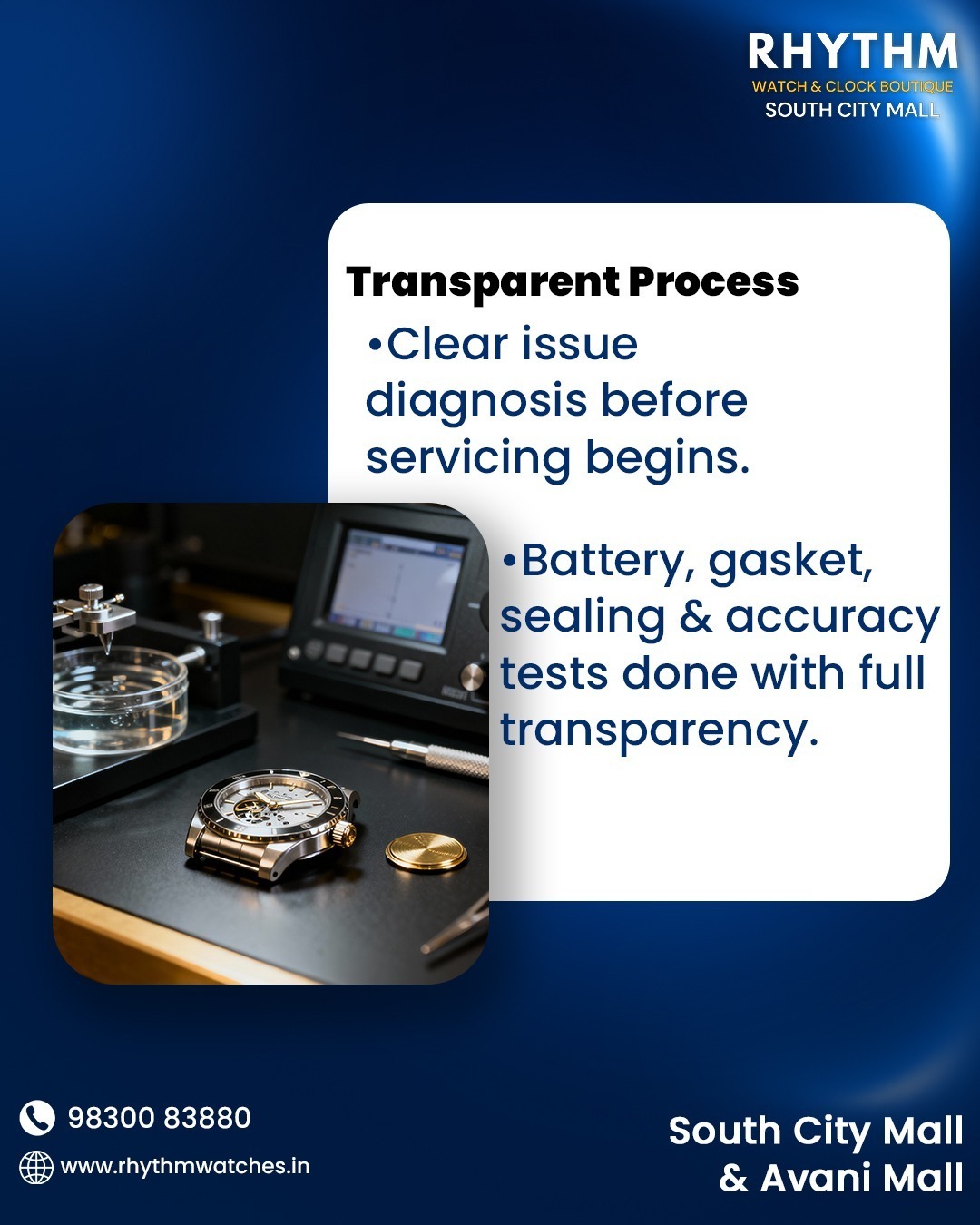
A proper automatic watch service is not just "cleaning and oiling." It's a multi-step process that takes 3-7 days depending on the watch complexity. Here's what happens at Rhythm:
- Step 1: Initial Diagnosis and Timing Test. Before opening the watch, we test it on a timing machine (also called a timegrapher). This measures the watch's amplitude, beat rate, and beat error. These numbers tell us the health of the movement before we touch it. We record baseline data so we can compare after servicing.
- Step 2: Complete Disassembly. The movement is removed from the case. Then the movement itself is disassembled into individual components: mainspring, balance wheel, gear train, winding mechanism, rotor, and all bridges and plates. A standard automatic movement has 100-200 individual parts.
- Step 3: Ultrasonic Cleaning. All metal components are cleaned in an ultrasonic cleaning machine using specialised watch-cleaning solutions. This removes old, degraded lubricant, dust, and microscopic debris that accumulate over years of wear. This step alone is why professional servicing can't be replicated at home.
- Step 4: Inspection and Part Replacement. Every component is inspected under magnification for wear, damage, or corrosion. Worn parts (gaskets, springs, pivots) are replaced. Seals and gaskets are always replaced as standard since rubber degrades over time.
- Step 5: Reassembly and Lubrication. Components are reassembled with fresh, grade-specific lubricant applied to each pivot point. Different parts of the movement require different lubricant viscosities. Using the wrong grade (or household oil) accelerates wear instead of preventing it.
- Step 6: Regulation and Timing. The reassembled movement is tested on the timing machine in multiple positions (dial up, dial down, crown up, crown down, crown left). A properly regulated watch should perform within manufacturer specs across all positions. We adjust the regulator until timing is optimised.
- Step 7: Case and Bracelet Servicing. While the movement is out, the case and bracelet are ultrasonically cleaned. Scratches can be polished out (on request). New gaskets are fitted and the case is resealed.
- Step 8: Water Resistance Testing. For water-resistant watches, the sealed case is pressure-tested to verify it meets the rated depth. This ensures the watch is safe for daily wear, hand-washing, and (where applicable) swimming.
- Step 9: Final Observation (48-72 hours). The fully assembled watch runs under observation for 2-3 days. We check that power reserve, timing accuracy, and all functions (date change, manual winding, automatic winding) are performing correctly before returning the watch.
What Happens If You Don't Service Your Automatic Watch
Skipping servicing doesn't make the watch stop immediately. It degrades gradually, which is why many people don't notice until the damage is significant:
- Dried lubricant increases friction. between metal parts. This causes microscopic metal shavings to circulate inside the movement, acting like sandpaper on the gears.
- • Gaskets and seals harden over time, losing their ability to keep moisture out. A watch rated to 100m when new may only be safe to 10m after 5 years without gasket replacement.
- The mainspring loses elasticity. reducing power reserve. A watch that once ran 40 hours may only hold 20-25 hours of charge.
- Accuracy drifts progressively. What starts as +10 seconds per day can become +40-50 seconds over a few years as the balance wheel pivots wear down.
The cost of a standard preventive service is ₹2,500-8,000 depending on the brand. The cost of repairing movement damage caused by years of neglected servicing can be ₹10,000-20,000+. In some cases, the entire movement needs replacement, which can cost more than the watch itself for mid-range brands.
Daily Care Tips to Extend Time Between Services
Simple habits can significantly extend the life of your automatic watch and reduce the frequency of servicing. Follow these practical care tips:
- Wear it regularly. Automatic watches are designed to be worn. If you rotate between multiple watches, consider a watch winder for pieces you don't wear daily. A stationary watch with a wound mainspring under tension for months can stress the spring.
- Keep away from magnets. Smartphones, laptop speakers, magnetic clasps on bags, and even iPad Smart Covers contain magnets that can magnetise the hairspring, causing the watch to run fast. If your watch suddenly gains 60+ seconds per day, it may be magnetised. A watchmaker can demagnetise it in 30 seconds.
- Avoid extreme temperature changes. Going from an air-conditioned room to outdoor heat (very common in Indian summers) causes the metal to expand and contract, which over time can affect gasket integrity.
- Don't adjust the date between 9 PM and 3 AM. Most automatic movements engage the date-change mechanism during this window. Forcing the date while gears are engaged can strip the date wheel.
- Wind the crown gently when hand-winding. 20–30 turns is sufficient for most movements. Stop when you feel resistance. Over-winding is rare in modern automatics but rough handling damages the crown stem.
- Rinse after saltwater or pool exposure. If your watch is water-resistant and you've been in the sea or pool, rinse it with fresh water afterwards. Salt and chlorine accelerate gasket degradation and metal corrosion.
Frequently Asked Questions
Q: How do I know if my automatic watch needs servicing?
A: The clearest signs are moisture under the crystal (urgent, same-day attention needed), the watch stopping despite regular wear, accuracy drifting beyond 25-30 seconds per day, reduced power reserve, unusual noises, or a stiff/gritty crown. If your watch has been running fine but hasn't been serviced in 5+ years, schedule a preventive service.
Q: How often should an automatic watch be serviced?
A: Every 3-5 years for most brands. Tissot Powermatic 80 movements with silicon hairsprings can go 5-7 years. Vintage watches should be serviced every 2-3 years. If you notice any warning signs earlier, don't wait for the scheduled interval.
Q: How much does automatic watch servicing cost in India?
A: At Rhythm, standard automatic servicing ranges from ₹2,500 for basic Seiko/Fossil movements to ₹10,000+ for Swiss chronograph overhauls. Luxury brands like Omega and Tag Heuer range from ₹8,000 to ₹18,000. Brand-authorized service centres charge 30-50% more.
Q: Can I service my automatic watch at home?
A: No. Automatic movements have 100-200 individual parts that require specialised tools, ultrasonic cleaning equipment, grade-specific lubricants, and a timing machine for regulation. Home servicing attempts almost always cause more damage than the original issue. Even something as simple as opening the case back improperly can scratch the movement or compromise water resistance.
Q: My watch is only losing 10-15 seconds per day. Is that normal?
A: Yes, for most automatic watches this is within acceptable range. Seiko 4R36 movements are rated for -35 to +45 seconds per day. Tissot Powermatic 80 is rated for -7 to +7 seconds per day. Only if drift exceeds your movement's rated accuracy consistently should you consider servicing for this reason alone.
Q: How long does watch servicing take?
A: At Rhythm, a standard automatic service takes 3-5 days including the 48-72 hour observation period. Complex movements or watches needing parts replacement may take 7-10 days. We'll give you a timeline at the time of drop-off.
Q: Is it worth servicing a ₹10,000 watch that costs ₹4,000 to service?
A: This depends on your relationship with the watch. If it has sentimental value, yes. If it's a pure utility piece with no emotional attachment, you might weigh it against buying new. That said, a properly serviced automatic watch can run for another 5-7 years, making the per-year cost of ownership quite reasonable. And unlike quartz watches, a well-maintained automatic can genuinely last a lifetime.
Q: Do you service all automatic watch brands?
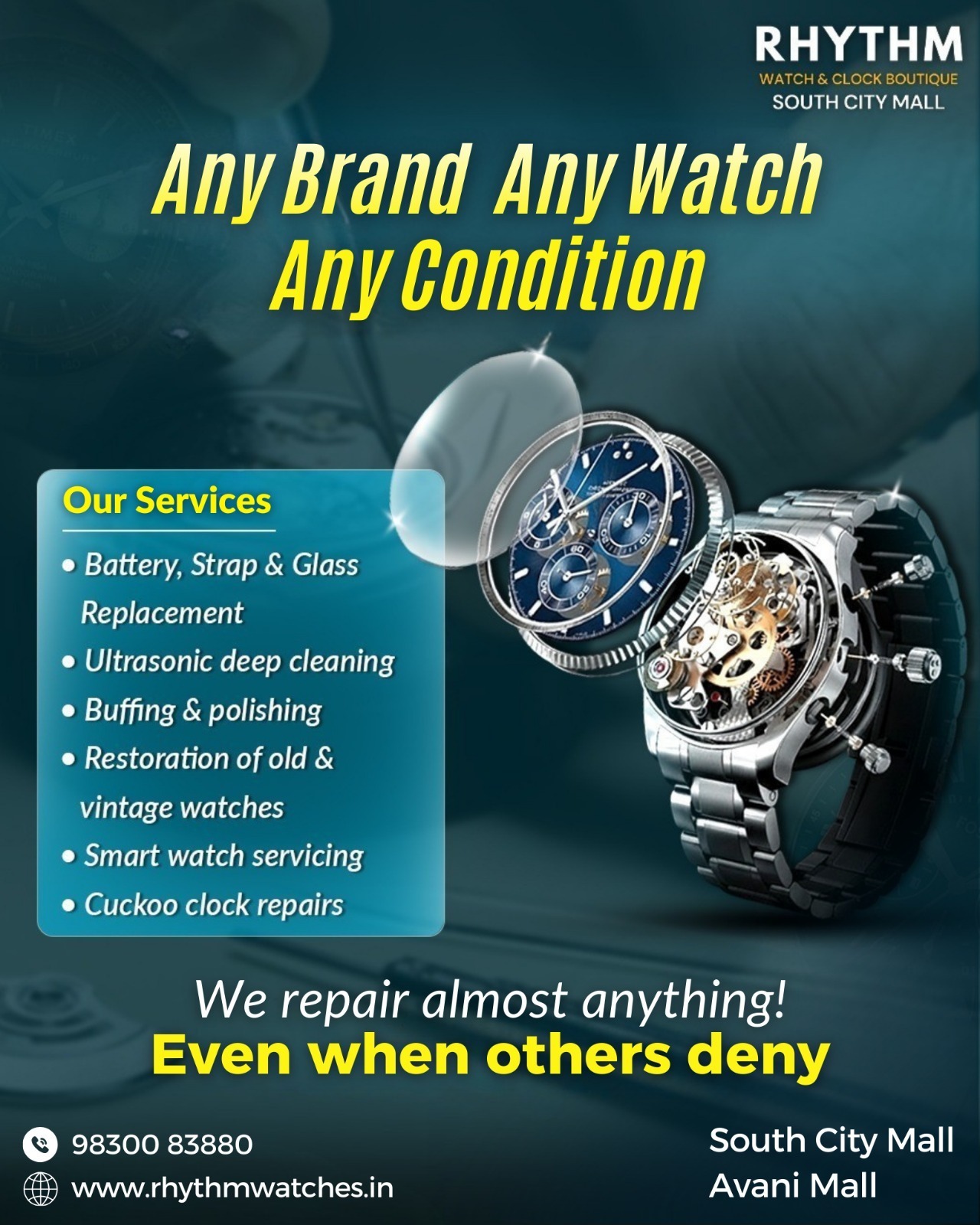
A: Yes. Rhythm services Seiko, Tissot, Fossil, Hamilton, Armani Exchange, Guess, and other automatic watches with ETA, Miyota, Seiko, and Sellita movements. We also handle vintage and antique automatic watches that other service centres may refuse due to parts availability. With 55+ years of experience since 1970, our technicians have worked on virtually every movement type in production.
Get Your Automatic Watch Serviced at Rhythm
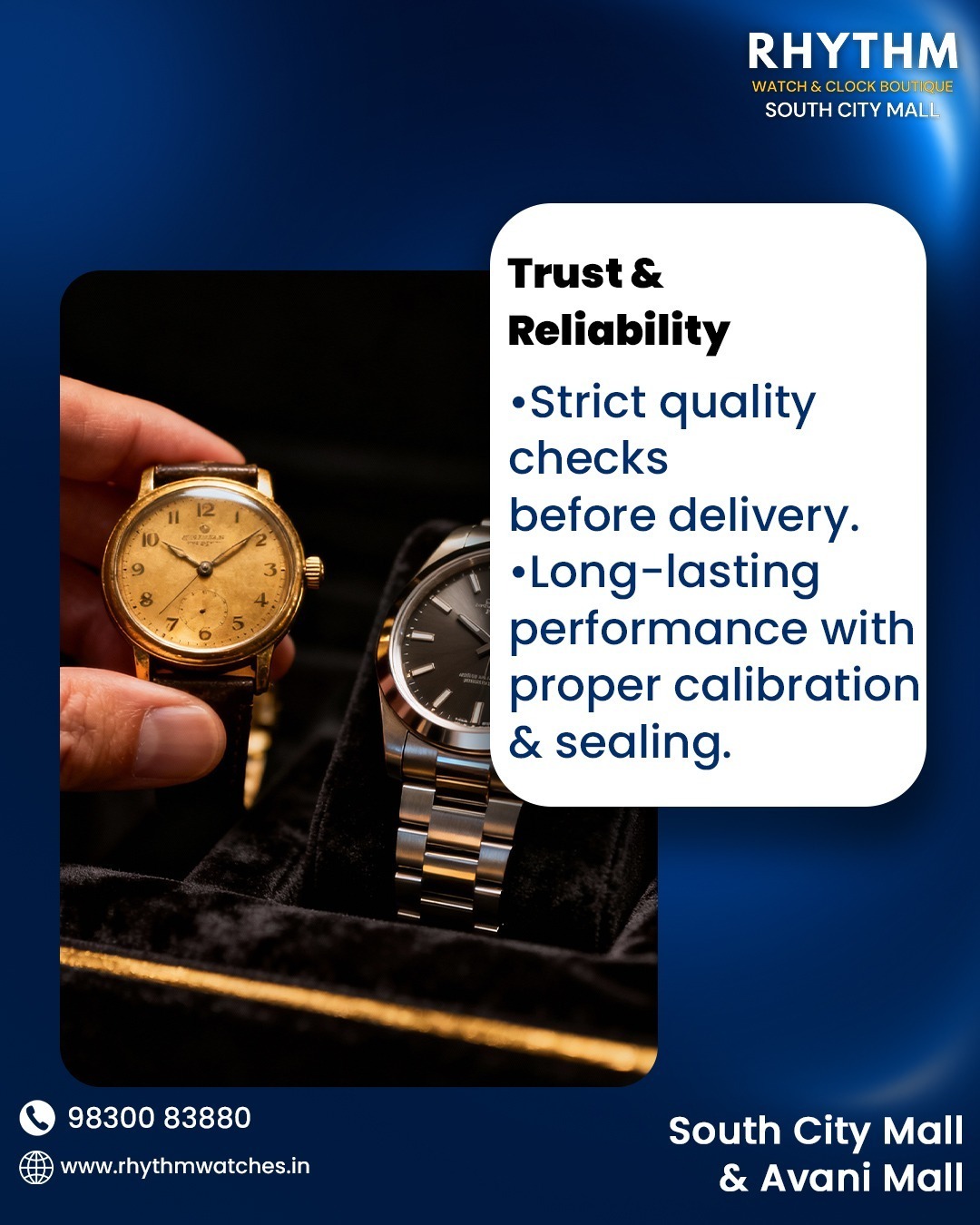
Rhythm Watch & Clock Boutique has been Kolkata's most trusted watch service destination since 1970. 55+ years of expertise. 12,000+ Google reviews at 4.9 stars. Our technicians use professional timing machines, ultrasonic cleaning equipment, and grade-specific lubricants for every service. Every automatic watch service comes with a 6-12 month warranty. Walk in with your watch for a free initial assessment and timing test. We'll tell you exactly what your watch needs before you commit to anything. WhatsApp for quick diagnosis.
- • Rhythm Watch & Clock Boutique, Ground Floor, South City Mall, 375 Prince Anwar Shah Road, opposite Starbucks, Kolkata 700068
- • Rhythm Watch & Clock Boutique - Avani Mall, Howrah, Jagat Banerjee Ghat Road, Shibpur, Howrah 711102